Category:
Posted on December 20, 2024
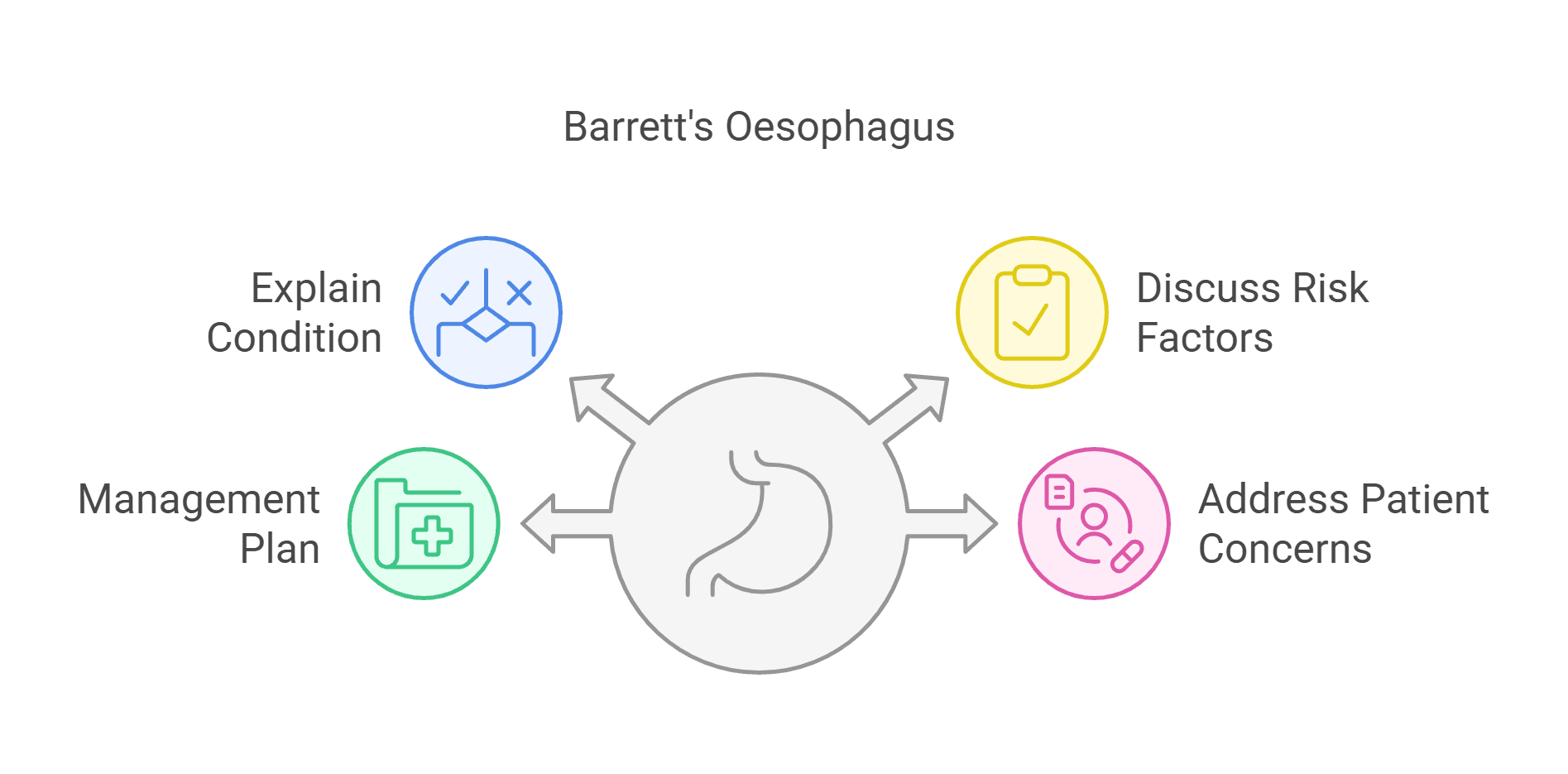
Barrett’s Oesophagus is a sensitive topic often encountered in the PLAB 2 OSCE. This station evaluates your ability to explain results, address patient concerns, and discuss management options clearly and empathetically. In this blog, we’ll guide you through a structured approach to handling this station effectively.
You are an FY2 in a GP clinic. Your patient, Mr. David Smith, a 55-year-old man, underwent an endoscopy last week. The results reveal Barrett’s Oesophagus, a pre-cancerous condition caused by long-term acid reflux. Your task is to explain the condition, its implications, and the management plan while addressing his concerns.

Start by introducing yourself and confirming the patient’s identity:
“Hello, I’m one of the doctors here. May I confirm your full name and date of birth?”
Set a patient-centered tone:
“I have your endoscopy results, but before I share them, may I ask a few questions about your health?”
Explore the presenting complaint and history:
“Why did you have the endoscopy?”
“Have you noticed any changes in your symptoms since the test?”
For Barrett’s Oesophagus, ensure you ask about:
Heartburn symptoms: Use ODIPARA (Onset, Duration, Intensity, Progression, Aggravating/Relieving factors, Associated symptoms).
Red flags:
“Any difficulty swallowing?”
“Any changes in your voice?”
“Any nausea or vomiting?”
When delivering the results, use clear and non-technical language:
“The test results show that you have a condition called Barrett’s Oesophagus. This means that the lining of your food pipe has changed due to long-term acid reflux.”
Reassure the patient:
“This condition itself is not cancer, and in many people, it remains stable without causing problems. However, it does carry a slightly higher risk of developing cancer compared to normal cells.”
Explain the need for surveillance:
“To monitor this condition, we recommend a follow-up endoscopy every three years. This will help us detect any early changes and treat them promptly.”
Counsel the patient on reducing risk factors and managing symptoms:
Weight management:
“Losing weight can reduce acid reflux and improve your symptoms. I see your BMI is 29, which means you are overweight.”
Dietary modifications:
“Avoid foods that can worsen heartburn, such as spicy foods, fatty meals, coffee, and fizzy drinks.”
“Try to eat smaller, more frequent meals and avoid eating 2–3 hours before bedtime.”
Smoking and alcohol:
“Smoking and alcohol can increase the risk of complications. We can refer you to a smoking cessation clinic and advise on safe alcohol limits—no more than 14 units per week.”
Explain the management plan:
Advice:
Weight loss, diet changes, and avoiding triggers.
Risk Factor Management:
Smoking cessation and alcohol reduction.
Medications:
“You may need medications like proton pump inhibitors (PPIs) to reduce stomach acid and protect the lining of your food pipe.”
“We may also test for H. pylori bacteria and treat it if necessary.”
Monitoring:
“We’ll schedule regular endoscopies every three years to monitor your condition.”
Safety Netting:
“Please come back if you experience symptoms like difficulty swallowing, unintentional weight loss, or persistent vomiting.”
Be prepared to answer common patient concerns empathetically:
Q: “Why don’t you just remove the affected area?”
A: “The food pipe is an important structure in the body, and surgery is not recommended at this stage. Monitoring allows us to catch and treat any changes early.”
Q: “Will I develop cancer?”
A: “The risk is low, but this is why regular monitoring is important. We’ll ensure any changes are detected and managed promptly.”
Q: “What happens if my symptoms get worse?”
A: “If your symptoms worsen, such as increased heartburn or difficulty swallowing, let us know immediately. We’ll reassess and adjust your treatment.”
If relevant, conduct a targeted examination:
General Observations: Look for signs of pallor, jaundice, or distress.
BMI Measurement: Discuss its relevance to acid reflux.
Abdominal Examination: Rule out tenderness, masses, or organomegaly.
Barrett’s Oesophagus is a manageable condition when caught early and monitored effectively. By using a structured, patient-centered approach, you can address concerns, provide clear explanations, and emphasize the importance of lifestyle changes and follow-up care. This station highlights the importance of empathy, clear communication, and clinical knowledge, essential skills for any doctor.
Become part of a platform crafted by doctors who've been in your shoes and know what it takes to pass PLAB 2. Don't miss your chance to practice smarter and get ahead.
✓ No credit card required • ✓ Instant access • ✓ Made by doctors