Category:
Posted on January 15, 2025
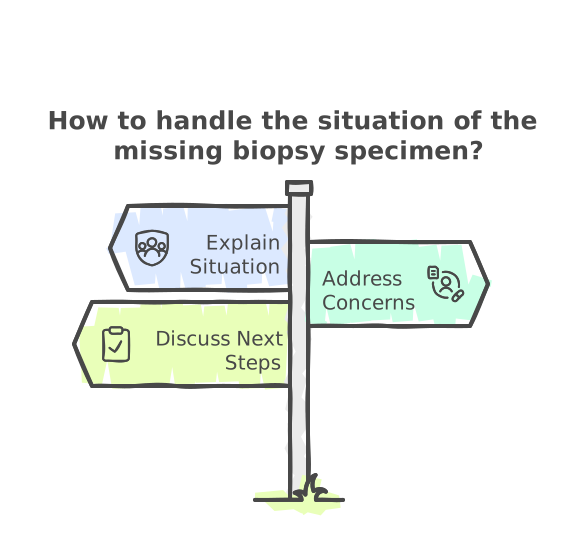
You are an FY2 doctor in the renal unit. A 22-year-old male, Ryan Carter, suspected of having glomerulonephritis, underwent a renal biopsy two days ago. The lab reports that the biopsy specimen was not received, and a thorough search has failed to locate it. You need to explain the situation to the patient, address his concerns, and discuss the next steps, including repeating the biopsy.
Communicate the issue empathetically and transparently.
Address the patient's concerns and emotions.
Explain the need for repeating the biopsy and provide reassurance.
Outline the management plan, ensuring patient comfort and understanding.
Highlight steps being taken to prevent future errors.
Start with a warm introduction:
"Hi, I’m Dr. [Your Name], one of the doctors in the renal unit. Are you Ryan Carter? Can I confirm your age, please? How are you doing today?"
Acknowledge the previous biopsy:
"I can see from my notes that you had a biopsy two days ago. How did that go for you?"
Assess his current condition:
"Have your symptoms, like the blood in your urine, improved, worsened, or stayed the same since the biopsy? Apart from this, is there anything else concerning you?"
Assess the Patient’s Knowledge:
"Do you have any idea why I am speaking with you today?"
Deliver the News with Empathy:
"I’m really sorry, but a mistake has occurred. After taking your biopsy, we sent the specimen to the lab and have been awaiting the results. However, the lab informed us that they never received it. Despite a thorough search, we’ve been unable to locate the biopsy."
Acknowledge the Emotional Impact:
"I can only imagine how frustrating and upsetting this must be for you. I want to sincerely apologize for this error and assure you that we’re taking this very seriously."
How Did This Happen?
"Typically, after a biopsy, the specimen is labelled and sent to the lab by a courier. It seems the mistake could have occurred during labelling, transport, or at the lab itself. At the moment, we don’t know exactly where the issue happened, but we have reported this to the concerned department, and they’re investigating."
Who Is Responsible?
"At this stage, we cannot say who is responsible, but our main priority is ensuring your health and safety while addressing this incident thoroughly."
Why Repeat the Biopsy?
"The biopsy helps us determine the exact cause of your kidney condition. Without it, we cannot provide the correct treatment, and delaying treatment could worsen your condition."
Patient’s Reluctance to Repeat the Biopsy:
"I completely understand your reluctance, especially given how painful the procedure was. This time, we will ensure you receive effective pain relief during and after the procedure. If needed, we can also arrange time off work by providing a sick note."
Immediate Steps:
Pain Management:
"We will coordinate with the relevant doctors to ensure you are given proper painkillers before and after the procedure."
Examination:
"I would like to examine you to ensure everything is okay at the moment."
Repeat Biopsy:
"We would like to repeat the biopsy to give you an accurate diagnosis and initiate the correct treatment. Is that okay with you?"
Incident Reporting:
"We have filed an incident report to ensure this issue is thoroughly investigated and steps are taken to prevent it from happening again."
Documentation:
"We will document everything related to this issue, including our conversation today, in your medical records."
Referral to Senior Team:
"Our senior team is aware of the situation and will ensure appropriate actions are taken moving forward."
Safety Net:
"If you experience any worsening symptoms, such as increased blood in your urine or new symptoms like pain or fever, please let us know immediately."
Follow-Up:
"We will schedule your repeat biopsy as soon as possible and keep you updated throughout the process."

Deliver the news with empathy and transparency.
Avoid blaming individuals or speculating about responsibility.
Reassure the patient about steps being taken to address the mistake.
Emphasize the importance of repeating the biopsy for accurate diagnosis and treatment.
Provide clear safety netting advice and ensure follow-up.
"Why can’t you treat me without the biopsy?"
"The biopsy helps us identify the exact cause of your kidney condition. Without knowing the cause, we can’t provide the most effective treatment."
"Who will ensure this doesn’t happen again?"
"The hospital’s investigation team is reviewing this case to determine what went wrong and implement measures to prevent such incidents in the future."
"How will you make the next biopsy less painful?"
"We will ensure you receive effective pain relief and support throughout the procedure."
"Can I trust this won’t happen again?"
"We are implementing additional checks to ensure the safety and accuracy of specimen handling."
Maintain a professional, empathetic tone throughout the conversation.
Focus on patient care and immediate resolution rather than assigning blame.
Ensure the patient feels supported and informed at every step.
Become part of a platform crafted by doctors who've been in your shoes and know what it takes to pass PLAB 2. Don't miss your chance to practice smarter and get ahead.
✓ No credit card required • ✓ Instant access • ✓ Made by doctors