Category:
Posted on November 16, 2024
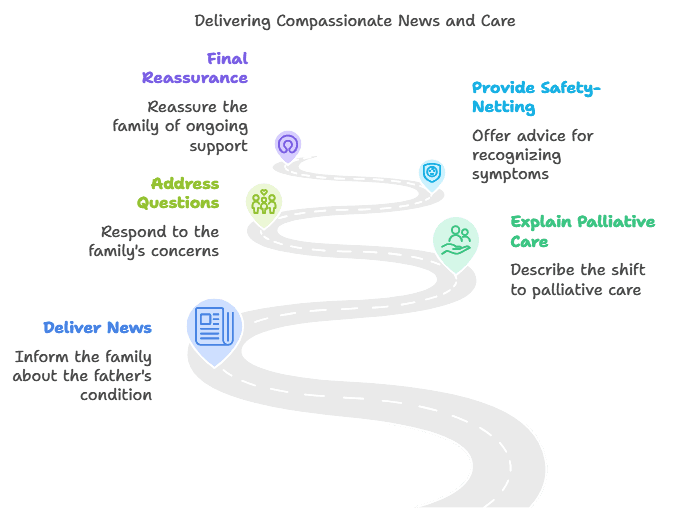
Handling a bilateral Ischemic stroke station in the PLAB 2 OSCE requires a balance of clinical knowledge, empathetic communication, and breaking bad news effectively. This station typically involves discussing the prognosis and palliative care with a patient’s relative, ensuring you address their emotions and questions with compassion and clarity.
This guide provides a step-by-step approach to navigate the station confidently, covering history-taking, breaking bad news, and addressing the family’s concerns.

Begin by introducing yourself and confirming the patient’s relationship with the family member:
“Hello, are you Mrs. Jackson? I’m one of the junior doctors looking after your father, Mr. George Parker.”
Confirm their relationship:
“How are you related to him?”
This establishes trust and sets the tone for a compassionate conversation.
Start by understanding what the family already knows:
“Before I explain everything, could you tell me what you’ve been told so far?”
This helps identify any gaps or misunderstandings in their knowledge, allowing you to align your explanation with their level of understanding.
Use open-ended questions to explore the details of both strokes:
First Stroke:
“What symptoms did your father develop during the first stroke?”
“What kind of tests were done, and what was the treatment plan?”
“How did he recover?”
Second Stroke:
“When did the second stroke occur, and what have you been told about it?”
“What treatment has been provided so far?”
Investigate the patient’s medical history to understand contributing factors:
“Does your father have any long-term conditions like high blood pressure, diabetes, or cholesterol issues?”
“Has he had a stroke or heart attack in the past?”
“Does he smoke, and is there a family history of similar conditions?”
Gather information about the patient’s social and living arrangements:
“Who does your father live with?”
“What does he do? Is he retired?”
“Has he appointed anyone as lasting power of attorney?”
Understanding the social context helps in planning the next steps, including family involvement in care.

Deliver the news clearly and compassionately:
“Unfortunately, a few weeks ago, your father had a stroke. While he initially showed improvement, he suffered a second stroke, which has affected both sides of his brain. I’m very sorry to tell you that, based on the CT scan and specialist assessments, your father is not going to recover this time.”
Key Points:
Avoid medical jargon.
Use phrases like “not going to make it” instead of “die.”
Pause to allow the family to process the information.
Explain the shift to palliative care with empathy:
“We are focusing on palliative care to ensure your father is comfortable and pain-free. This involves giving fluids and painkillers to manage his symptoms and improve his quality of life.”
Reassure the family about your commitment to care:
“We will ensure that your father is not in pain or distress during this time.”
Be prepared to handle the family’s concerns with compassion and clarity:
Q: “Have you given up on him?”
A: “I’m sorry if it feels that way. Our focus is on providing comfort and dignity in his current condition.”
Q: “Can you delay his death?”
A: “It’s not possible to prolong life in a terminal condition like this, but we will ensure he’s comfortable.”
Q: “Are you going to feed him?”
A: “Feeding through a tube wouldn’t be beneficial and could cause distress in his condition.”
Q: “Can I speak to a senior doctor?”
A: “Of course, I’ll arrange for a senior doctor to speak with you. However, the plan is unlikely to change as it’s based on the best interests of your father.”
Provide safety-netting advice to help the family recognize any concerns or complications:
“If you notice symptoms like tingling, vision problems, or any other issues, please reach out to us immediately.”
Explain the plan for follow-up:
“We’ll continue to monitor your father and schedule follow-ups to ensure his comfort.”
End the conversation with empathy:
“I understand how difficult this is for you. Please know that we are here to support you and your father through this time.”
The bilateral ischemic stroke station in PLAB 2 OSCE tests your ability to handle sensitive situations with clinical knowledge and compassionate communication. By following this structured approach—building rapport, breaking bad news, and addressing concerns—you can provide clarity and support to the patient’s family. Remember, the focus is on empathy, clear communication, and ensuring the family feels supported during this challenging time.
Become part of a platform crafted by doctors who've been in your shoes and know what it takes to pass PLAB 2. Don't miss your chance to practice smarter and get ahead.
✓ No credit card required • ✓ Instant access • ✓ Made by doctors